
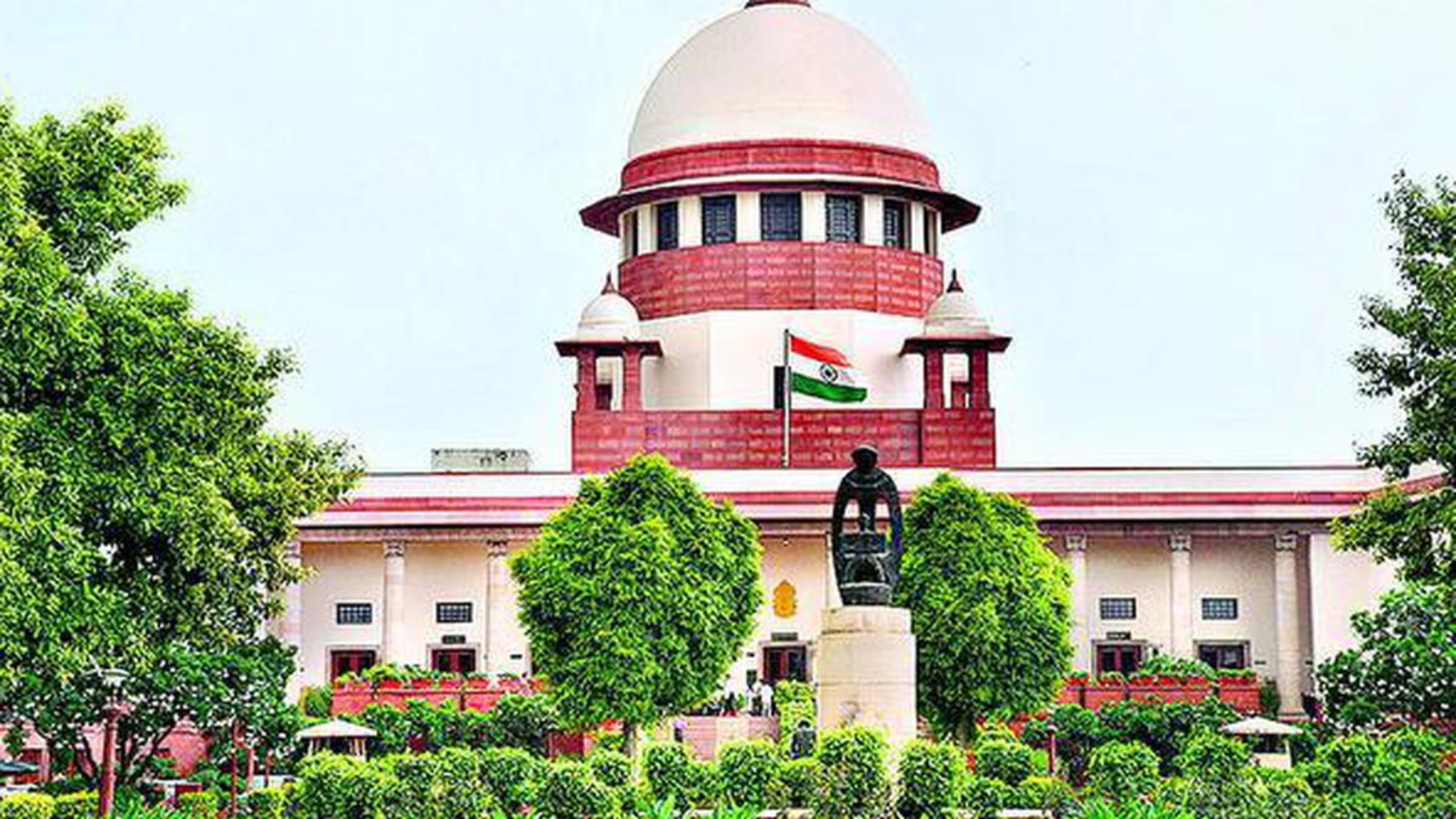
The Supreme Court has delivered a ruling with real significance for gender equality, holding that a married daughter cannot be turned away from a compassionate appointment simply on account of her marital status. The Court’s reasoning rested on a fairly simple but important premise: marriage does not, by itself, cut a daughter off from her parental family. On that basis, it struck down a policy that limited compassionate appointments to only those daughters who were divorced or deserted, finding it inconsistent with Article 14 of the Constitution.
The judgment came from a Division Bench of Justice M.M. Sundresh and Justice Prasanna B. Varale, which allowed an appeal challenging a Patna High Court order. That earlier order had upheld the rejection of a compassionate appointment sought by the daughter of a government employee who had passed away.
Background of the case
The matter began after the appellant’s husband died, prompting the family to seek a compassionate appointment for their daughter. The authorities turned down the request on two separate grounds. One was an objection said to have been raised by the deceased employee’s son. The other was the Bihar government’s policy, dated December 10, 2014, which permitted compassionate appointments for daughters only if they were divorced or deserted.
The appellants pushed back on both counts. They pointed out that the son had already issued a no-objection certificate, which meant his earlier objection no longer held. They also argued that the policy itself was discriminatory, since it singled out married daughters based on marital status alone. And although the daughter’s divorce had not been formally recognised in law, they noted that she continued to live with her parental family and remained financially dependent on them.
What the Supreme Court said
In setting aside the policy, the Court reiterated a principle it has affirmed before: classifications based purely on gender or marital status cannot survive scrutiny under Article 14. As the Bench put it:
“This Court has repeatedly held that any classification differentiating a daughter from a son is, per se, unconstitutional.”
The Court was equally clear in rejecting the underlying assumption that marriage automatically transfers a woman’s loyalty and belonging to her husband’s family. There is no legal basis, it held, for presuming that a daughter’s ties to her parental family end once she marries.
The Bench noted that a married daughter may well continue to live with, support, or depend on her parental family, and where that is the case, her marital status alone cannot be used to disqualify her from compassionate appointment. Restricting such appointments only to divorced or deserted daughters, the Court found, amounts to arbitrary discrimination and sits uneasily with the constitutional promise of equality.
Why compassionate appointment exists in the first place
The Bench also returned to first principles, noting that compassionate appointment exists to give a deceased employee’s family immediate financial support at a difficult time. Given that purpose, authorities should be wary of applying an overly technical or rigid approach, particularly in cases where the claimant remains closely tied to, or dependent on, the deceased employee’s family.
It also pointed out that one of the grounds the authorities had relied on no longer held up, since the deceased employee’s son had already provided a no-objection certificate.
The outcome
The Supreme Court allowed the appeal, setting aside both the Patna High Court’s judgment and the original order rejecting the appellant’s application. It directed the State of Bihar to reconsider the application strictly on its merits, with the entire exercise to be completed within eight weeks of receiving the judgment.
Taken together, the ruling reflects the Court’s continuing position that gender based stereotypes have no place in determining legal rights, and that daughters, regardless of marital status, are entitled to the same treatment under the Constitution as anyone else.
Add a Comment