
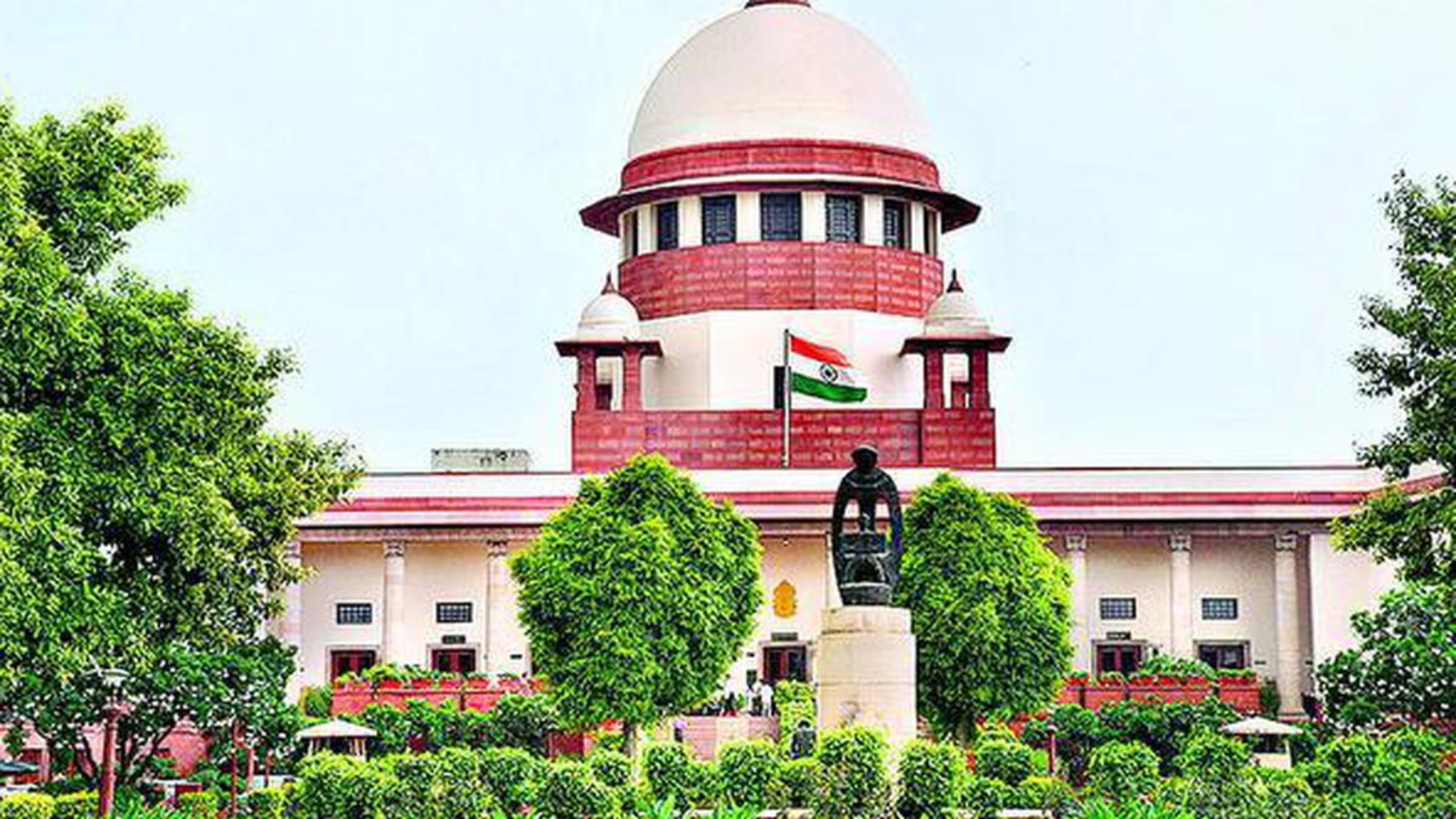
Justice Ujjal Bhuyan of the Supreme Court used a recent public address to make a forceful case for judicial transparency, telling his audience that the public has every right to know how courts operate, who is deciding their cases, and how those judges came to be appointed in the first place. The occasion was the launch of the Judicial Transparency Index: Assessing Disclosure of Information by the Supreme Court and the High Courts, where Justice Bhuyan delivered the keynote address. He used the platform to question the practice of sealed cover proceedings and to voice unease over what he sees as a recent decline in transparency around Collegium resolutions.
The event was organised by the JALDI Initiative at the Vidhi Centre for Legal Policy. There, Justice Bhuyan argued that transparency in the judiciary is not merely good administrative practice but a genuine constitutional requirement, one that underwrites accountability, protects judicial independence, and keeps public trust in the justice system intact.
On why open courts matter, he put it plainly: “Citizens have a right to know what is happening in the courts. They have a right to know who would be their judges. They have a right to know judgments. These should be in the public domain.” He gave credit to the Indian judiciary for the “significant strides” it has already taken toward openness, but was equally clear that considerable ground remains to be covered, particularly around the secrecy that still surrounds judicial appointments under the Collegium system.
He went further, suggesting that later editions of the Judicial Transparency Index ought to turn their attention to the Collegium itself. His point was that deliberations over appointments and transfers are still conducted behind closed doors, that the reasons behind rejected or deferred recommendations are almost never made public, and that the criteria used to select judges have never been formally written down anywhere.
To situate his argument historically, Justice Bhuyan turned to Jeremy Bentham, quoting the philosopher’s often-cited line: “Where there is no publicity, there is no justice. Publicity is the very soul of justice.” His broader point was that judicial power, precisely because it is exercised in the name of the people, should never be shielded from their scrutiny.
He then invoked the 1967 case of Naresh Shridhar Mirajkar v. State of Maharashtra, using it to reaffirm the long-standing principle that court proceedings should, as a rule, take place in open court, with departures from this reserved for genuinely sensitive situations. In his telling, open hearings do two things at once: they guard against arbitrary use of judicial power, and they give the public greater confidence that proceedings are being conducted fairly and impartially.
Live streaming of court proceedings came up as well, which Justice Bhuyan described as one of the more meaningful transparency developments of the last decade. He pointed to the Supreme Court’s 2018 ruling in Swapnil Tripathi v. Supreme Court of India, noting that live streaming gives real effect to the constitutional right to access justice and to receive information. That said, he was careful to note that some restrictions on unauthorised editing or circulation of streamed footage.
Perhaps the sharpest part of his address concerned the sealed cover procedure, under which certain information reaches the court without being shared with all the parties involved. He questioned whether this practice can be reconciled with the Constitution at all: “Information is withheld from the other side. Is that not a violation of the principle of Article 14? You are not giving equal treatment and equal opportunity to both parties before the court.” His argument was that invoking national security, as is commonly done to defend sealed cover proceedings, does not resolve the deeper tension with the principle of openness—a tension he believes deserves fresh scrutiny in a functioning constitutional democracy.
He also drew on the 2020 Constitution Bench decision in Central Public Information Officer, Supreme Court of India v. Subhash Chandra Agarwal, which held that the office of the Chief Justice of India comes under the Right to Information Act. Referring specifically to Justice D.Y. Chandrachud’s opinion in that case, Justice Bhuyan made the point that judicial independence is something accountability builds up, not something secrecy protects.
Turning to the Collegium’s more recent practice of announcing judicial appointments without accompanying reasons, Justice Bhuyan was direct in his criticism. He noted that recent Collegium statements have lacked the kind of explanation earlier resolutions used to provide, calling this shift “going back on the transparency principle.” For him, stating reasons serves two purposes at once: it strengthens institutional accountability, and it properly acknowledges the merit of the judges being recommended. “What harm is caused by discussion in public?” he asked, framing openness itself as a form of protection against appointments that do not hold up to scrutiny.
He closed by describing transparency not as some optional add-on to how the judiciary conducts itself, but as the very foundation on which India’s justice system rests. Open hearings, public access to judgments, reasoned decisions, transparent appointments, and institutional accountability, he said, are all connected threads of the same idea, and public trust in the judiciary ultimately depends on the institution’s willingness to remain open to scrutiny. He ended with the observation that “Transparency is not alien to Indian jurisprudence,” but is instead one of its core constitutional values.
Add a Comment