
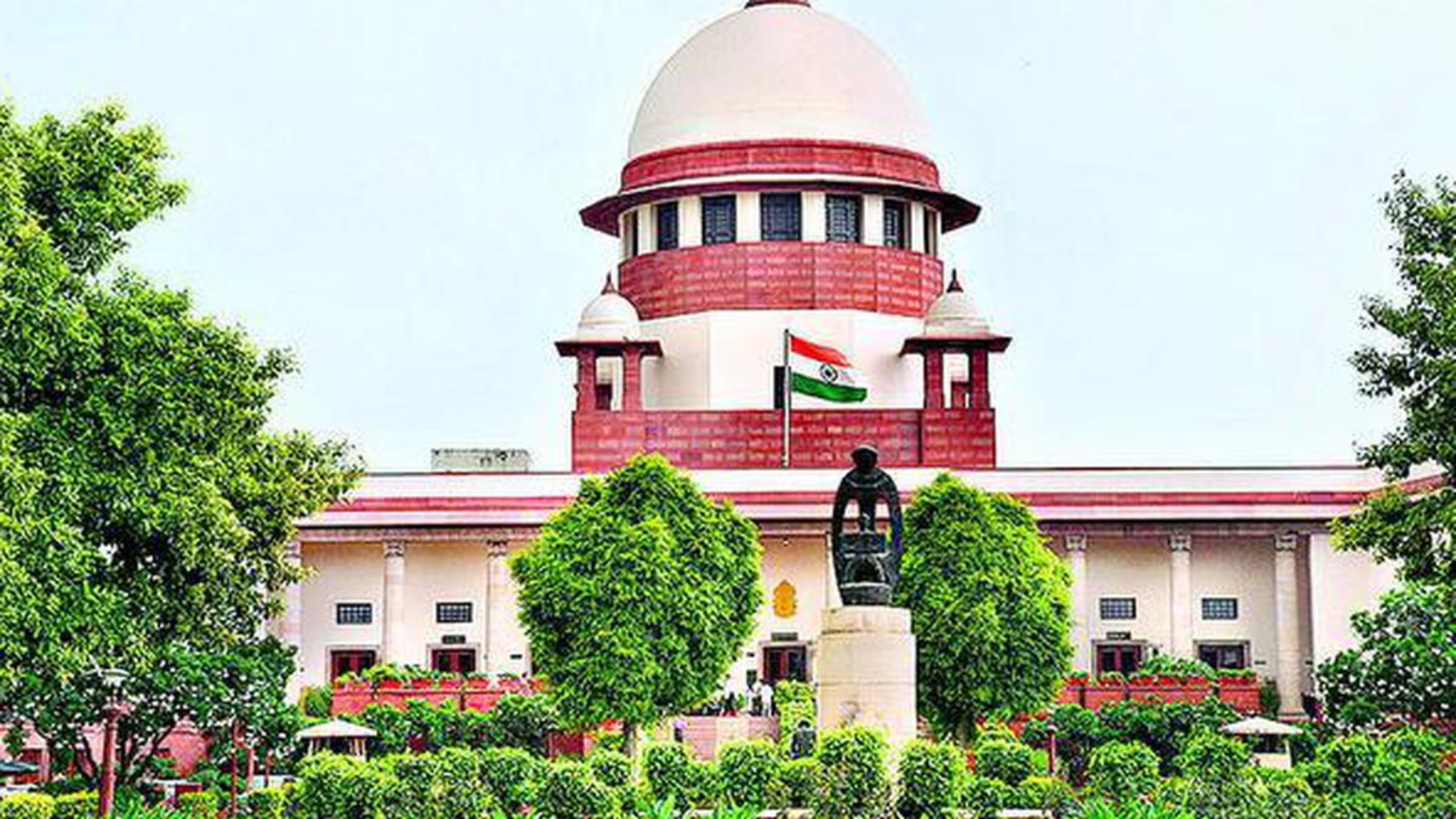
The Supreme Court has established that any person who faces direct consequences from a court order must receive judicial access to their case. Justice Vikram Nath and Justice Sandeep Mehta ruled that writ cases must allow all affected parties to access the court system. The court system must allow all affected parties to participate in the proceedings because they did not enter the case at its start.
(supreme court) What Was the Case About?
The case involved a hotel owner in Jalandhar. The hotel owner had received permission to transform his property into commercial space, and he intended to construct a hotel. While applying for a completion certificate, authorities raised concerns about the building’s front setback. The building rules established by Punjab in 2025 introduced new building regulations, which enabled building owners to request reduced setback requirements. The building owner declared that his building complied with the newly established regulations.
The High Court case brought more challenges when the 2025 rules faced legal opposition. The court issued an interim order that suspended particular sections of the new regulations while preventing the enforcement of rule violations that had previously been established.
How Did This Affect the Appellant?
Authorities used the High Court interim order against the hotel owner even though he had no connection to that case. The authorities sealed his property and issued a demolition order against him.
The owner of the property used various legal methods to open different court cases that he wanted to join. The property owner attempted different legal methods and then requested to become part of the active High Court proceedings. The owner requested the court to explain its interim order because he believed officials were using it against him.
The High Court rejected their request, saying they were not a necessary party.
What Did the Supreme Court Say?
The Supreme Court found fault with the High Court’s methods of conducting its work.
The explanation showed that “necessary party” status does not restrict people from being categorized as “proper parties” who help complete problem resolution through their participation.
The interim order required the hotel owner to face actual consequences, which needed judicial examination. The Court confirmed that they would not treat her as a separate entity.
The judges established that when an order begins to affect a person, then the court needs to provide that individual with the chance to present their case.
Key Takeaways from the Judgment
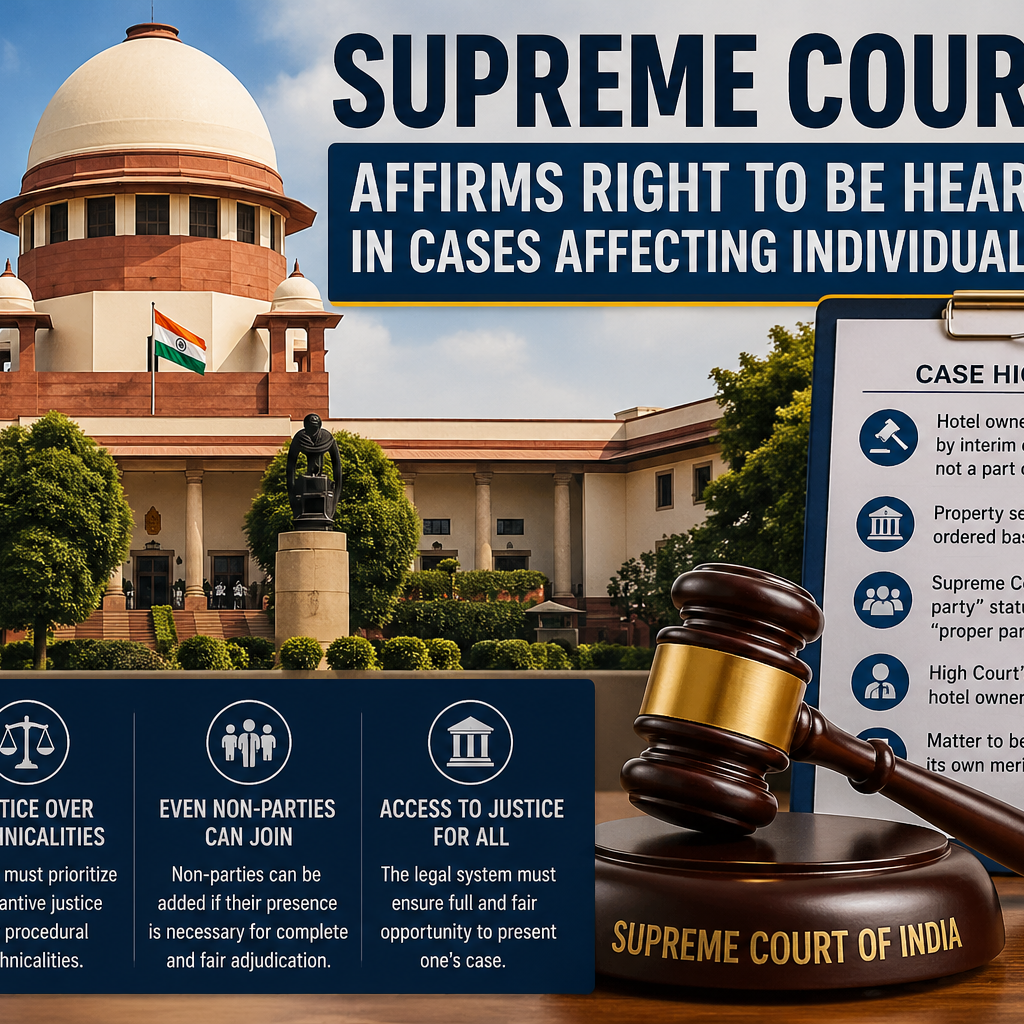
- If a court order directly impacts you, you have the right to be heard.
- The courts need to achieve just results through their decisions instead of following procedural requirements.
- Even non-parties can join a case if their presence helps resolve the issue properly.
- The legal system should deliver complete access to legal solutions when actual conflicts exist between parties.
Final Outcome
The Supreme Court granted the appeal, which resulted in the High Court decision being overturned.
The hotel owner will now be added as a party in the High Court case. The High Court will re-examine the matter independently. Related cases will continue on their own merits. The current status of the property will remain unchanged until the case is decided.
The Supreme Court did not make any decisions about the legitimacy of the new building regulations or the propriety of the demolition that took place. The High Court will determine those matters at a future date.The ruling of the Supreme Court of India reinforces an important principle of natural justice—audi alteram partem, meaning no one should be condemned unheard. By emphasizing that even individuals who were not originally part of a case can be included later if they are affected, the Court has widened access to justice. This approach prevents situations where decisions are made in isolation, without considering all stakeholders who may suffer consequences.
The Court also clarified that legal proceedings should not become overly technical or rigid. Instead, the primary objective should be to ensure fairness and a complete resolution of disputes. By recognizing the distinction between “necessary parties” and “proper parties,” the Court ensured flexibility in judicial processes. A “proper party” may not be essential to initiate a case, but their involvement can be crucial for delivering a fair and comprehensive judgment.
Add a Comment